
What Does “Bean-to-Bar Chocolate” Actually Mean?
“Bean-to-bar” is a phrase that’s become part of the chocolate landscape. You see it on bars, on menus, on social media. But what it actually means, and why it matters, isn’t always obvious.
At its simplest, bean-to-bar means this:
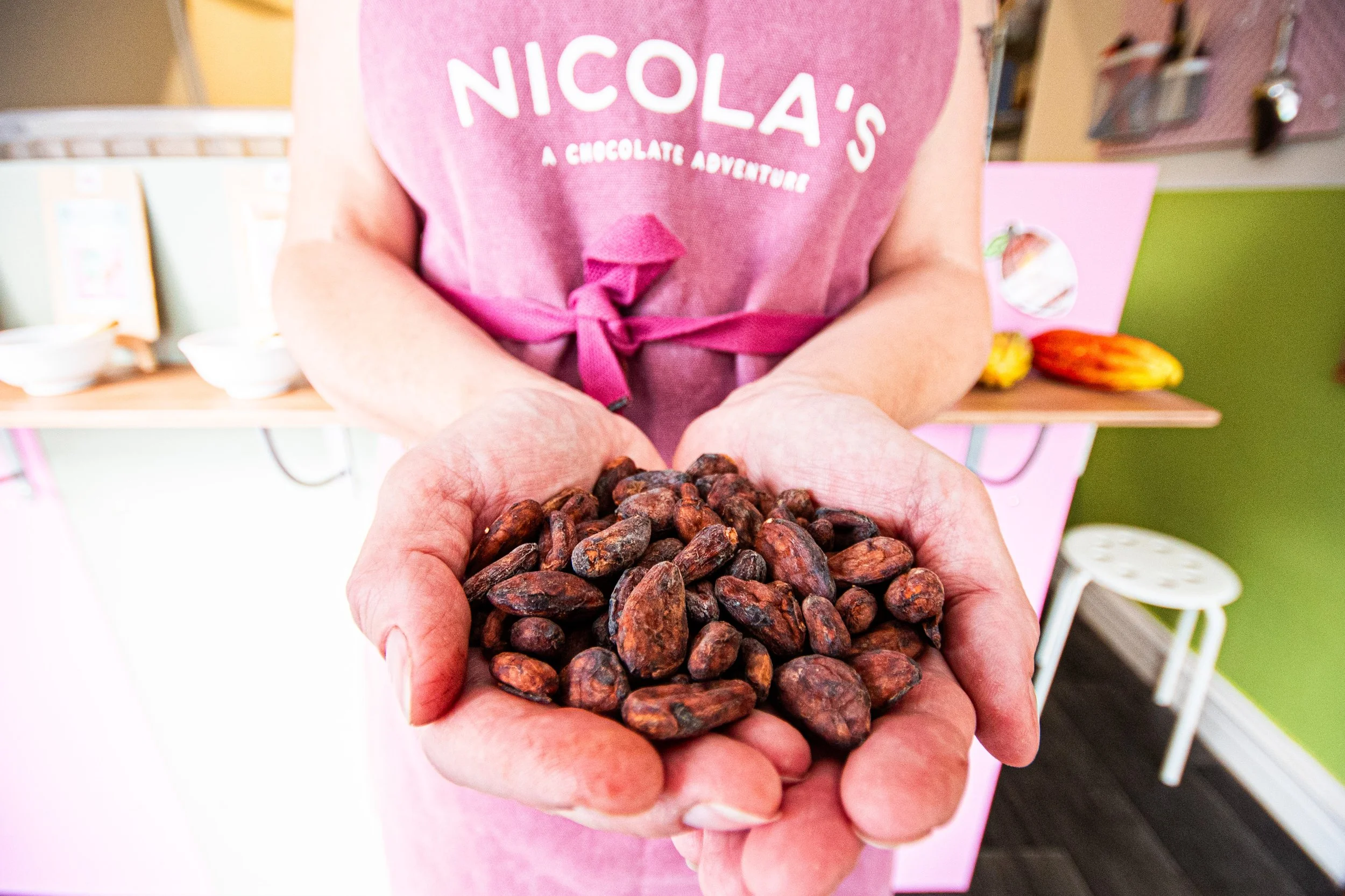
The chocolate maker starts with raw cacao beans and carries out every stage of the chocolate-making process themselves, all the way through to the finished bar.
That includes:
sourcing the cacao beans
roasting
cracking and winnowing
grinding and refining
tempering
moulding and packaging
Nothing arrives pre-made. Nothing is melted down and reshaped. The flavour, texture, and character of the chocolate are built slowly, step by step.
It’s a longer process, with many decisions along the way, and nowhere to hide!
What bean-to-bar is not
This is where things can get confusing.
Chocolate can be:
handmade
small batch
beautifully packaged
made with care
…and not be bean-to-bar.
Many chocolatiers (including some excellent ones) work with couverture - finished chocolate that’s already been made elsewhere. They melt it, temper it, flavour it, and turn it into bars or bonbons.
There’s nothing wrong with that. But it is a different process, and it leads to a different result.
Couverture is usually made on an industrial scale, so there are questions around how ethical or sustainable it is - and how much transparency there is around the cacao itself. The quality can vary too, depending on how the chocolate has been formulated and handled long before it reaches the chocolatier.
Bean-to-bar means the maker is responsible for the chocolate itself, from the raw beans onwards, not just what happens at the end. Many chocolatiers do work with bean-to-bar, it’s always worth asking before you buy.
Why flavour starts at the bean
One of the biggest misunderstandings about chocolate is where flavour comes from. Most people assume chocolate tastes the way it does because of:
sugar levels
cocoa percentage
added flavours
In reality, flavour starts much earlier.
Cacao beans already contain an enormous range of potential flavours before they ever become chocolate. Fruitiness, acidity, nuttiness, floral notes - all of that develops during fermentation and drying at origin.
By the time I start roasting, the flavour is already there. My job isn’t to overwrite it, it’s to help it come through clearly.
That’s why origin matters. And why two chocolates with the same percentage can taste completely different.
Why bean-to-bar chocolate tastes different
When you control the whole process, you’re constantly making choices that affect how the chocolate feels and tastes.
If you roast too lightly, flavours can feel sharp or underdeveloped. If you over roast, everything can start to flatten and bitterness can be introduced.
Grinding and refining take time. As the chocolate becomes smoother, flavours soften and settle. Acidity calms down. The chocolate becomes more cohesive.
Bean-to-bar chocolate often tastes cleaner, clearer, less muddled.
Why bean-to-bar chocolate costs more
This question comes up a lot - and it’s a fair one.
High-quality cacao beans, sourced for flavour and sustainability, cost significantly more than commodity cacao. That’s especially true when you’re buying in small quantities, rather than by the tonne.
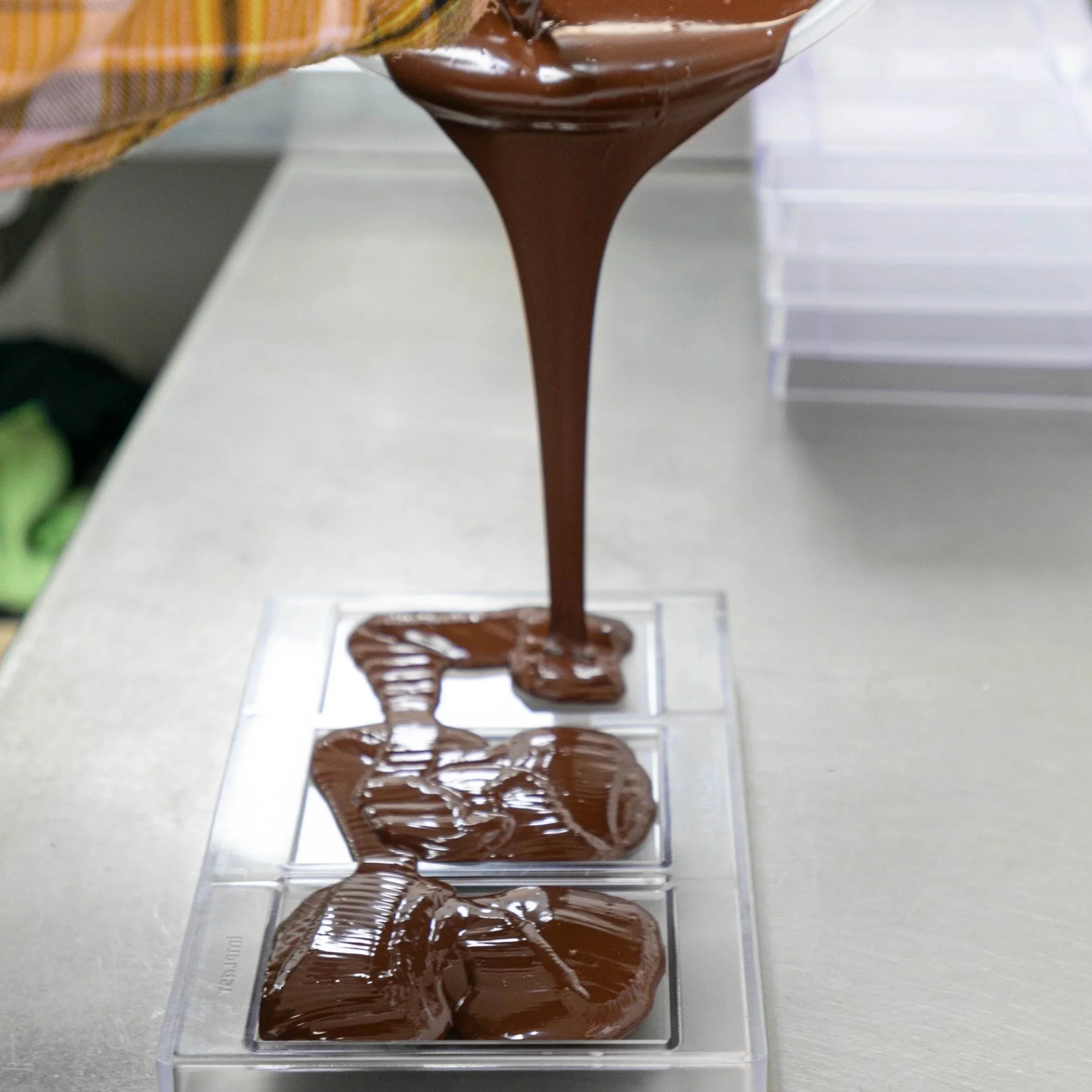
Bean-to-bar chocolate also usually takes:
more time
more labour
smaller equipment
more trial and error
There’s waste. There are batches that don’t quite work. There’s a constant process of tasting, adjusting, and waiting.
You’re not paying for luxury. You’re paying for time, attention, choice and the expertise of a maker who’s dedicated to making something amazing every time, without compromise.
How to tell if a chocolate really is bean-to-bar
If you’re curious, or standing in front of a shelf trying to work it out, here are a few useful clues:
Does the maker name the cacao origin?
Do they talk about roasting or grinding/refining/conching?
Are they open about how the chocolate is made?
Can you trace who actually made the bar?
If someone is doing all of this, they’re usually quite open about it. Bean-to-bar isn’t something you quietly tuck away.
A final thought
Bean-to-bar isn’t about being purist or precious. It’s about staying close to the ingredient.
It’s about letting cacao speak, rather than smoothing everything into sameness.
And once you notice that difference, it’s hard to un-taste it.
